

Before those May flowers, let's talk about that April lawn care
To see a lush, green yard this season, timing and technique matter.


BY SUE FRANCK
Contributing Writer
April showers may bring May flowers, but what about your lawn?
If you’re eager to see a lush, green yard this season, timing and technique matter just as much as effort. The good news: with a few smart steps in early spring, you can build a healthy, vibrant lawn without wasting time, money, or energy.
In our region of eastern Washington, lawns typically begin waking up in March. By April, growth is picking up speed, and from May through October, your grass is in full stride. That makes April the perfect launch point for setting your lawn up for success.
One of the first things to check is thatch — the layer of dead grass and organic matter that builds up between the soil and living grass. A little thatch is normal, but anything thicker than half an inch can cause trouble. It blocks water, air, and nutrients from reaching the roots, leading to patchy growth and a lawn that struggles in dry conditions. If your lawn has built up too much thatch, now through May is the ideal window to dethatch and restore balance.
If your soil feels hard or compacted, aeration is another powerful spring fix. Spiking or aerating your lawn allows oxygen, water, and nutrients to penetrate deeper into the soil, encouraging stronger root systems and more resilient grass.
Once your lawn is prepped, it’s time to feed it. Fertilizing shortly after dethatching gives your grass a boost right when it needs it most. Keep in mind, though, that fertilizing can also encourage weeds, so pairing it with an appropriate herbicide may be worthwhile. If de-thatching isn’t necessary, aim to fertilize in late April through early May. Additional applications in mid-June, early September, and early to mid-November will keep your lawn thriving throughout the year.
Most lawns in eastern Washington primarily need nitrogen, but a simple soil test can reveal any specific deficiencies. When choosing a fertilizer, you’ll find three main types: quick-release for fast results, slow-release for steady growth and consistent color, and combination “bridge” fertilizers that offer the best of both worlds. If your lawn sits on sandy soil or a slope, consider slow-release options to reduce runoff and protect groundwater.
While fertilizing and soil care are important, the real secret to a great-looking lawn is mowing — done right. Consistency and height make all the difference. Weekly mowing should begin in April. During peak growth in May and June, you may need to mow more frequently to keep up.
Ideal mowing height generally falls between 1.5 and 3 inches, depending on your grass type. Since most lawns in our area are a mix of grasses, a safe rule of thumb is to mow to about 2 to 2.5 inches when the grass reaches roughly 3.25 inches tall. Avoid cutting too much at once — lowering your mower blade by more than half an inch in a single pass can stress the grass, leading to browning and increased vulnerability to pests and disease.
Grass clippings can be a benefit or a burden, depending on how you manage them. Thick layers left behind can smother your lawn and promote disease, but when mowing regularly at the proper height, fine clippings break down quickly and return valuable nutrients to the soil. In fact, leaving clippings in these conditions can improve lawn health, especially if you mow frequently enough to keep them light and dispersed.
Another often-overlooked detail is mower blade sharpness. Dull blades tear grass instead of cutting it cleanly, leaving ragged edges that turn brown and make your lawn look stressed. While this won’t usually kill your grass, it weakens over time, making your lawn more susceptible to disease and insects. Keeping your blades sharp ensures a clean cut and a healthier, greener appearance.
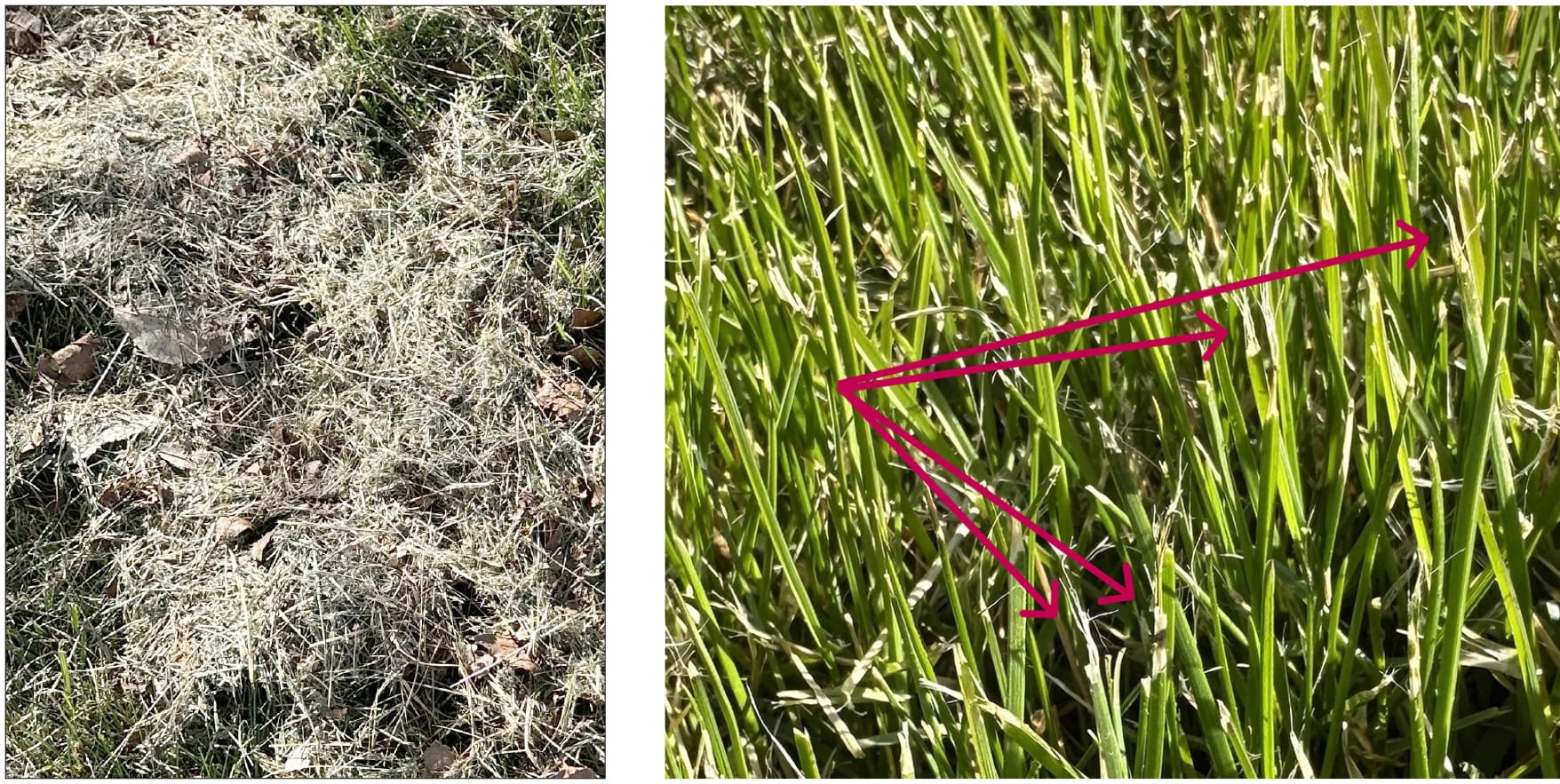
Finally, proper watering ties everything together. For best results, water early in the morning — between 4 and 7 a.m. This timing reduces evaporation and lowers the risk of disease. Aim to water deeply but infrequently, allowing moisture to reach as deep as 12 inches. Then let the top couple of inches of soil dry out before watering again. This encourages roots to grow deeper, improving drought tolerance and overall lawn health.
With the right care in April, your lawn won’t just survive the season, it will thrive, rewarding you with rich color, strong growth, and a yard you can truly enjoy all summer long.
APRIL TIP BOX
~ Sharpen blades before your lawn tells you to. Aim to sharpen it every 20–25 hours of mowing (or a couple of times each season).
~ Interested in learning more? Online searches offer many options, but research-based gardening information is most reliable when found on .edu and .org websites, including WSU Master Gardeners. You can also get personalized local advice by emailing WSU Grant-Adams Master Gardeners at ga.mgvolunteers@wsu.edu.
ALL ABOUT SUE
An Ephrata-area resident since 1959, Sue Franck is a retired dental hygienist and certified WSU Master Gardener for Grant-Adams counties. Happiest when getting her hands dirty, Sue operates her seedling business, Blissful Blooms, and has been a vendor at the Moses Lake Farmers Market since 2022, selling vegetable and flower starts. Her gardening column will appear monthly at GCJ.news.


