Ephrata, SL food banks continue service after USDA unknowns
Local food pantries have weathered last year’s national economic, political turbulence.


BY REBECCA PETTINGILL
Contributing writer
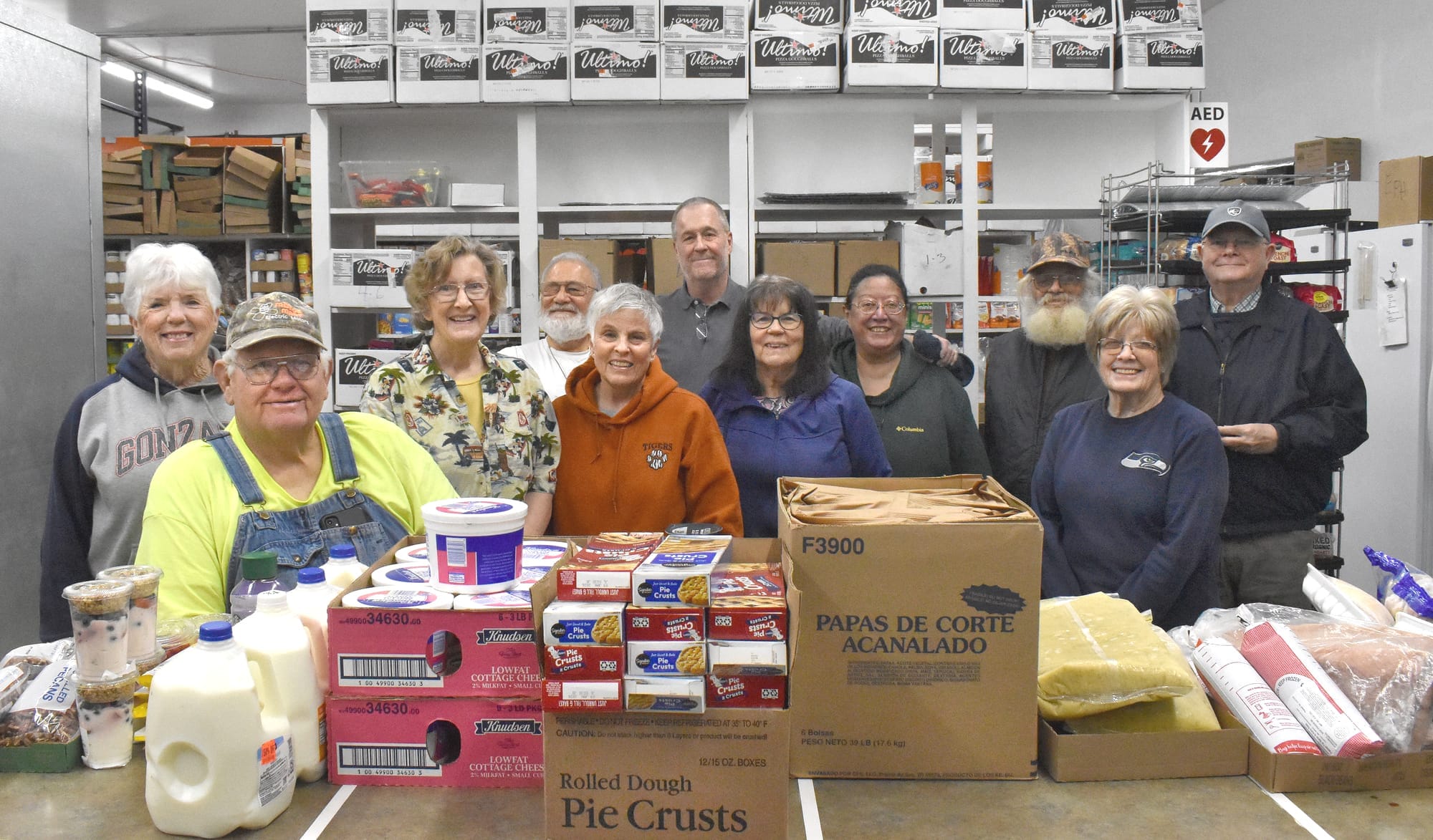
EPHRATA — For now, food banks in Ephrata and Soap Lake seem to have weathered last year’s national economic and political turbulence, thanks in part to financial support from both state agencies and local residents.
When the federal government shut down on Oct. 1, it was uncertain whether Supplemental Nutrition Assistance Program benefits — commonly called food stamps — would be distributed in November by the U.S. Department of Agriculture. At the time, Washington state had nearly 900,000 people enrolled in the SNAP program, according to USDA numbers.
In response, Gov. Bob Ferguson directed the state Department of Social and Health Services to shift nearly $2.2 million per week in funding to the state Department of Agriculture, which provides grants directly to community food banks across Washington.
The federal shutdown ended on Nov. 12 after Congress passed appropriations for the full fiscal year, restoring the SNAP program. But in apparent response to that 43-day lapse, community members also opened their wallets to help out locally.
“We received about $70,000 in donations (for the year), which is up considerably from (the prior) year, which was about $32,000,” said Mary Mantz, a volunteer with the Ephrata Food Bank. “We feel that this increase was due to concern that people would lose their food stamps during the government shutdown.”
There were also concerns over federal funding cuts announced by the USDA in March 2025 for such programs as the Local Food Purchase Assistance Cooperative Agreement, which was designed to pay farmers to provide food to schools and food banks.
To date, the Ephrata Food Bank does not seem to have been affected, Mantz said recently.
“We have mainly stayed the same in support, money and commodity-wise, from the government,” she said. “We were worried in 2025 that funding would be cut … but so far it has stayed pretty much the same.”
The Soap Lake Food Bank also continues to receive USDA commodities on a regular basis, board member Gene Wing said last month.
SLFB president Fred Wright further explained this week that USDA assistance has shifted a bit — Soap Lake is receiving slightly less food due to cuts in some programs, but gaining more monetarily in other areas than before.
Which all seems to balance out, said Wright, noting, “They took from one hand and gave to the other.”
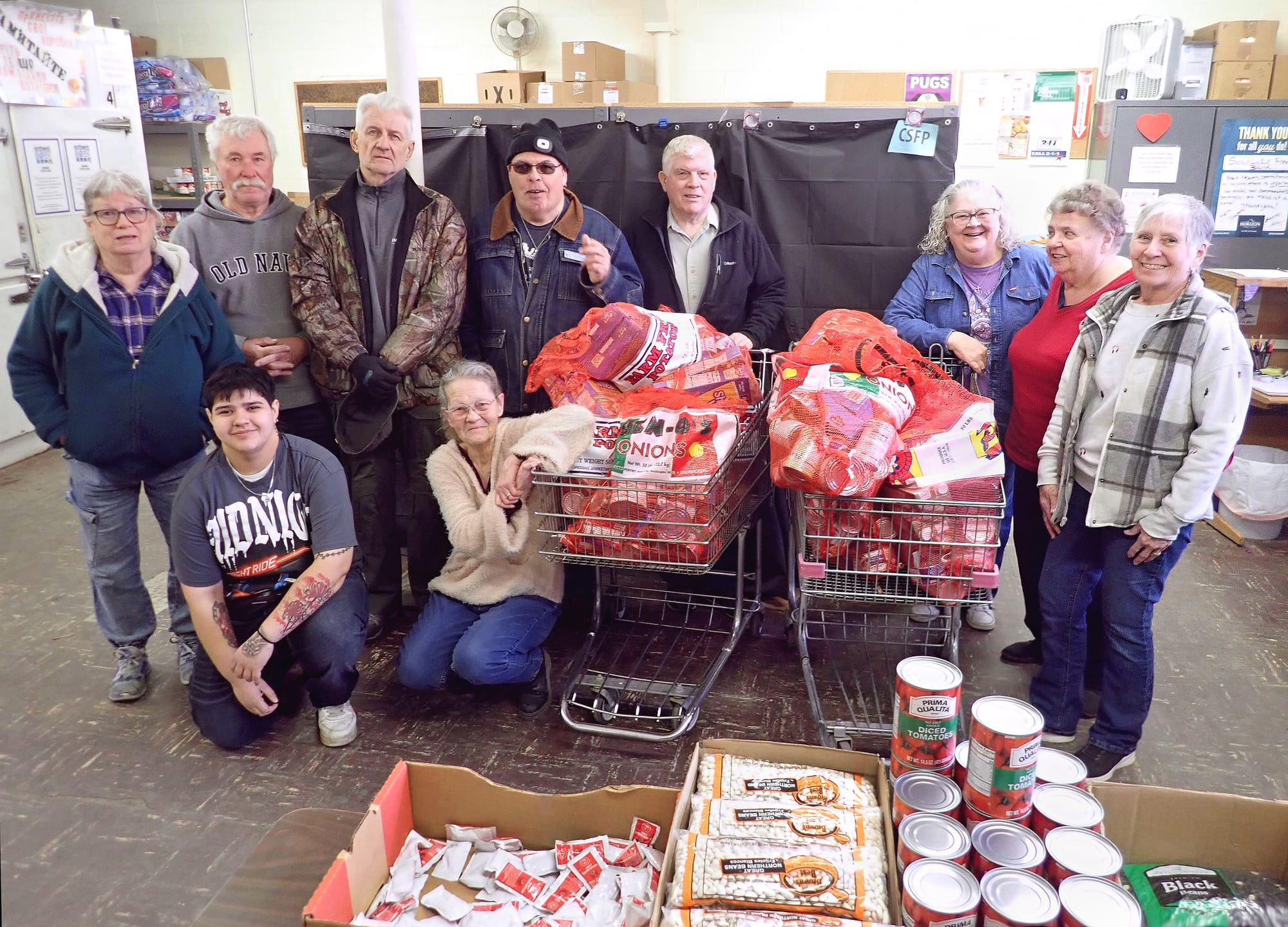
Collectively, the Ephrata and Soap Lake food banks serve about 2,100 people a month from the communities and rural areas of Ephrata, Soap Lake, Coulee City, Hartline, Wilson Creek and Marlin.
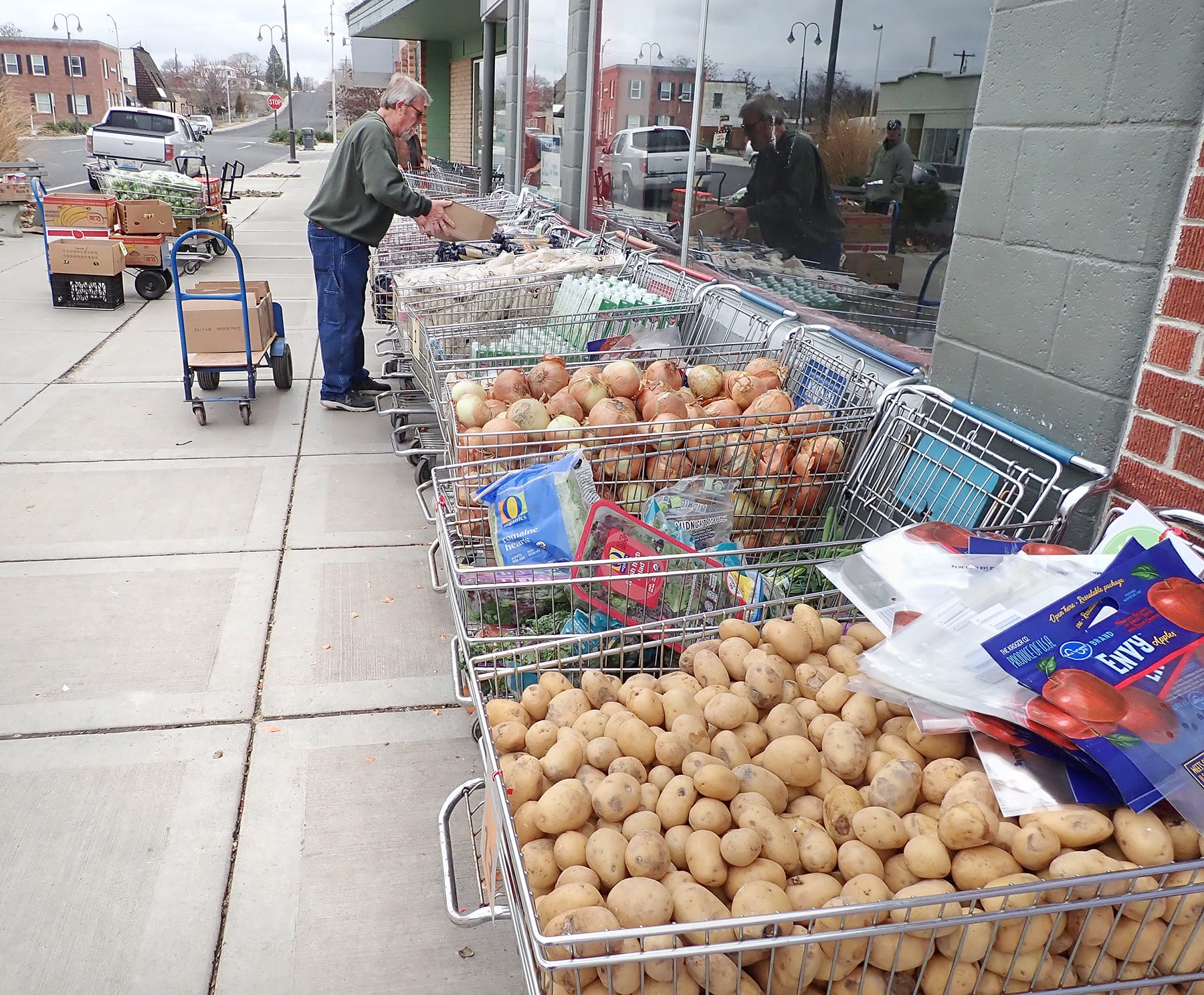
According to feedingamerica.org, nearly 16% of Grant County’s population — some 15,870 residents — were considered “food insecure” in 2023. An official USDA term, food insecurity is when people don't have enough to eat and don't know where their next meal will come from.
While federal support for local food banks is continuing, volunteers say their patrons are experiencing other cost-of-living increases which lead them to seek additional food assistance.
Many of them are senior citizens on fixed incomes and minimum-wage earners facing higher costs for rent, utilities, taxes, insurance, medications and more, said Mantz.
She was thankful for the “significant support” provided by local organizations and businesses through financial contributions, food donations, discounts on goods and services, and volunteer manpower.
“This food bank is open due to the wonderful support of our community and businesses,” said Mantz. “It can’t happen without (them).”
Both Mantz and Wright said monetary donations are greatly appreciated by food pantries because those funds provide discretionary revenue to address specific needs or purchase opportunities.
Community volunteers are another valuable asset and extra help is always welcome.
“As in any nonprofit, we are supported by (an older) group who are mainly in their seventies and eighties,” Mantz explained. “And our wish is that those who are newly retiring will think about giving us some time to help, either (to) do some lifting, picking up food, or taking over one of our programs.”
Located at 1010 A St. S.E., the Ephrata Food Bank is open Mondays and Thursdays from 2-4 p.m. Patrons are allowed to utilize its services once a week.
To qualify for assistance and to verify residency, first-time patrons must sign an Emergency Food Assistance Program (TEFAP) form, show a driver’s license or ID card, and provide two recent, separate pieces of mail listing their physical address. After their initial visit, recipients only need to bring a driver’s license or ID card.
For more information, call the Ephrata Food Bank at 509-754-5772 or email ephratafoodbank03@gmail.com.
The Soap Lake Food Bank is located at 325 E. Main Ave. and is open Tuesdays from 10 a.m. to 3:25 p.m. Information is available by calling 509-246-0164.
SLFB president Wright said patrons are asked whether they live within Soap Lake’s service area, but are not required to provide verification. Those who live outside of the area, such as Ephrata or Moses Lake, are provided assistance on their first visit, but they’re asked to contact food banks in their own communities if future help is needed, said Wright.
For residents in the Marlin and Wilson Creek areas, Grant County Transit Authority provides free dial-a-ride service to the Soap Lake Food Bank on Tuesdays. A minimum of three riders is needed for the weekly bus service. Interested patrons should notify GTA two to three days in advance by calling 509-765-0898, ext. 101, or emailing dart@granttransit.com. Patrons should bring their own reusable bags to carry their commodities.